

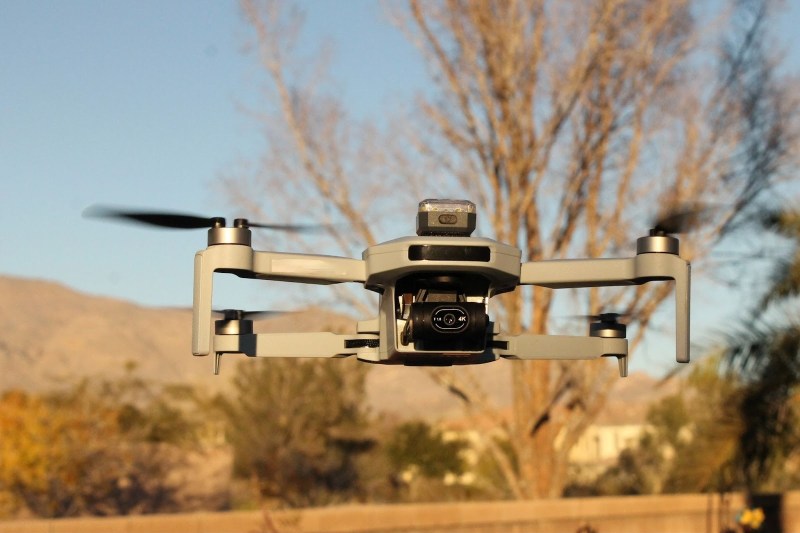
The following Potensic Atom 2 review was written by Jay Mathews, certified Part 107 drone pilot, owner of Aces Up Drones in Las Vegas with a special interest in Drone Soccer and STEM pathways for education and workforce development, and Vets to Drones Member.
FTC Disclaimer: This is my personal drone, and I received no payment or endorsement from Potensic for this review.
The Potensic Atom 2 is a sub-250-gram consumer drone positioned as a budget alternative to DJI’s Mini series. At $300-$520 depending on configuration, it targets first-time drone buyers and casual content creators who want 4K video capabilities without spending $700+ on a DJI Mini 4 Pro.
Quick specs:
- Weight: 249g (no FAA registration for recreational use*)
- Camera: 48MP photos, 4K/30fps HDR video.
- Flight time: 32 minutes (claimed) / 25-27 minutes in real-world conditions
- Range: 10km (manufacturer claim)
- Price: $300-$500
*Requires FAA registration if used commercially or if you add exterior components like strobes for night flying.

Who should buy the Potensic Atom 2?
This drone makes sense for:
- Complete beginners who want to learn drone flying without a major investment
- Casual travelers who want aerial footage for personal use
- Hobbyists who fly occasionally and prioritize value over cutting-edge features
- Users who don’t need integration with professional flight logging software
- Drone pilots seeking a DJI alternative
Who should skip the Potensic Atom 2?
Skip this drone if:
- You plan to fly commercially and need reliable flight logs (it doesn’t export to AirData or similar services)
- You frequently fly in challenging conditions where connection reliability is critical
- You want the most advanced obstacle avoidance and tracking features
- You’re willing to spend $200-300 more for DJI’s ecosystem and support
Potensic Atom 2 camera: better than expected for the price
The 1/2-inch Sony CMOS sensor enables you to shoot in 8K photo and 4K video. Those features make this budget drone feel upgraded beyond its price point.
What works:
- 8K photos provide solid detail for social media and casual printing
- F1.8 aperture improves low-light performance compared to cheaper drones
- AI Night mode genuinely helps with evening shots, reducing noise noticeably
- Vertical shooting mode is useful for Instagram and TikTok content
What doesn’t:
- 4K video is capped at 30fps (no 60fps option for smoother motion)
- Dynamic range is limited compared to higher-end drones
- Without an ND filter, footage in bright conditions looks washed out
- The gimbal isn’t as smooth as DJI’s stabilization
Should I buy filters for the Potensic Atom 2?
Yes. Budget an extra $20-40 for ND filters if you’re serious about video quality.
You can control minor adjustment settings before and during flight, but an ND filter is essential if you want to add more detail to your photos. The photos below show the dramatic difference—these were taken with and without the ND filter with no further adjustments made. Adding any photo editing software would make these photos stand out even more.


Potensic doesn’t actually make filters for their drones, but third-party companies do. I used the RCGEEK ND Filters Set for DJI Mavic, which was also compatible with the Potensic Atom 2. The best part? These filters were just $20.
AI modes: genuinely useful (not just marketing)
Unlike some budget drones that slap “AI” on basic features, the Atom 2’s intelligent modes actually enhance the flying experience.
AI Track works well for following a subject or making cinema-quality shots, allowing the user to free up their minds to create and capture those stunning follow shots without worrying about the controller. The three modes (Spotlight, Follow, Parallel) provide creative options once you understand how each behaves. It’s not as locked-on as DJI’s ActiveTrack, but it’s functional for recreational use.
AI night mode also adds to the experience by intuitively making adjustments for nighttime shooting, reducing noise and adding light to dark areas. Don’t expect miracles — it’s still a small sensor — but evening shots are usable where they’d be unusable without it. You’ll notice a difference in low-light shooting, brightening shadows and reducing noise.
The remote controller decision: Is the screen worth $120?
Potensic offers two controller options, and this choice significantly impacts your experience and budget.

RC PT-1 (phone mount controller): $299-$399
- You provide the phone
- Lower cost
- Familiar interface if you’re used to phone screens
RC PTD-1 (integrated 5.5″ screen): $399-$499
- Built-in screen eliminates phone battery drain
- Better visibility in bright sunlight
- More reliable connection (one less wireless link)
- Faster setup—no phone mounting
I purchased this cheaper version, meaning I had to rely on my iPhone 13 Pro as the display. The cord has to be secured and there is a little movement. My particular iPhone model doesn’t allow for immediate image transfer, which means I also need to download from the microSD card to my laptop. However, newer iPhone models (14+) are supported through Potensic’s SmartTransfer feature.

Despite the additional cost, the integrated screen controller is worth it if you’re buying the Fly More Combo anyway. After using friends’ devices and seeing how it was a more seamless experience, I do wish I had paid the extra $120 for the version that has the built-in screen. The integrated screen eliminates the hassle of mounting your phone and provides improved screen visibility. Knowing that most other drones offer an integrated screen on the controller, it will be a key consideration in my next purchase.
Both types of screens show the needed detail in flight, including satellite info, battery percentage, time remaining, elevation, distance, speed, and—most importantly—the home point locator.
Here’s a look at the screen from my iPhone:

What it’s like flying the Potensic Atom 2
The Potensic Atom 2 flies smoothly under normal conditions (basically little to no wind). When flying with the controller, you can easily adjust the control settings of the joysticks.
How does the Potensic Atom 2 handle wind?
Although lightweight, the drone withstood wind gusts up to 24 mph in my trial. When it got windier than that a warning on my screen notified me of significant winds and a recommendation to decrease altitude. Although flying in this condition will have an adverse effect on the battery life, it does give the new pilot a sense of confidence if put into a slightly uncomfortable situation.

How long does the Potensic Atom 2 battery last
Forget the 32-minute claim. You’ll definitely want to purchase additional batteries for any sustained flying and filming.
In real-world scenarios, flight time drops to as low as 25-27 minutes under normal flying conditions, and even less when facing wind, shooting longer videos, or changing between flying modes (normal, video, and sport). The Fly More Combo gives you over 90 minutes of combined flight time when you add up all three batteries — essentially making it mandatory for meaningful flying sessions.
Connections drops
For beginners, going a long distance away is nerve-wracking. The manufacturer states up to 10km distance, however, during testing I received several on screen messages regarding signal strength.
Especially as a new user, be careful of terrain features, where connections can be even more challenged. Test the distance on a known, open platform before traversing hills or other terrain.
Use of 3rd party services (or lack thereof)
This is the main area where experienced pilots will be disappointed. Potensic keeps all flight data internal to their app with no easy export to third-party services like AirData.
I reached out to the Potensic team about this exact issue, but instead my communications left me frustrated that there was no easy way to download my flight data.

Why this matters: For commercial pilots who need to log flight hours for FAA Part 107 compliance, this creates unnecessary friction. Flight logging services like AirData help pilots track total flight time, maintain maintenance records, and analyze flight patterns—none of which are easily accessible with the Potensic system. Recreational flyers won’t miss this feature, but it’s a dealbreaker for professionals.
Price comparison and bundle value
| Package | Cost | What’s Included | When to choose this model |
| Standard Kit (RC PT 1) | $359, discounted to $299 | Drone, 1 battery, ability to work with your phone as a controller, basic accessories | Only if you already own spare batteries |
| Standard Kit (RC PTD 1) | $479 discounted to $399 | Drone, 1 battery, screen controller, basic accessories | Skip it — one battery isn’t enough |
| Fly More Combo (RC PT 1) | $479 discounted to $399 | Drone, phone controller 3 batteries, charging hub, bag, additional accessories | Best value for most buyers |
| Fly More Combo (RC PTD 1) | $599 discounted to $499 | Drone, 3 batteries, charging hub, screen controller, bag, additional accessories | Best overall package if budget allows |
I purchased the Potensic Atom 2 Fly More Combo (RC PT 1), which is what this review is primarily based off of.

What’s that strobe? Keen eyes might notice I also mounted a strobe from a third-party to my drone, which is obviously not included. I used the Firehouse Technology ARC V Drone Strobe Anti-Collision Light strobe. I chose this strobe in case of any twilight or night flights where an anti-collision strobe is required. This strobe complies with regulations for 3 state mile visibility, and was a lightweight, removable option. It can also assist in visual observations of daytime flight at low altitude and longer distance.
Overall impression: a good drone if you know the limitations

The Potensic Atom 2 is an entry level drone packed with upgrades and is a great beginner drone for the hobbyist, a new pilot looking to get stick time, or for the experienced photographer looking to add more to their arsenal. The 4K camera quality, AI tracking features, and sub-250g weight make it a solid entry point for drone flying.
However, the connection reliability issues and lack of professional flight logging support mean this isn’t a drone you’ll grow into if you get serious about aerial photography. It’s a stepping stone, not an end destination.
For the $399 Fly More Combo price (with phone controller), the Atom 2 offers legitimate value. Just understand you’re trading some reliability and professional capability for that lower cost — which is a perfectly reasonable trade-off for recreational users.
The post Potensic Atom 2 Review: Is this $300 drone worth it for beginners? appeared first on The Drone Girl.
