In Episode 229 of The Robot Report Podcast, hosts Steve Crowe and Mike Oitzman recap the major robotics news of the week.

Kevin Damoa, cofounder and CEO of Glid Technologies. | Credit: Glid
Our guest on this show is Kevin Damoa, founder and CEO of Glid Technologies. He is a mechanical engineer, operations executive, inventor, and veteran of the U.S. military. He has developed technologies that have enabled space exploration and the deployment of clean mobility solutions such as hydrogen-powered airplanes.
Damoa’s career began in the U.S. Army at age 17, when he served in South Korea for two years before being forward-deployed to Iraq with the 3rd Armored Cavalry Regiment. After leaving the U.S. Army after his second tour in Iraq, he joined the U.S. Air Force, where he served as a logistics officer and firefighter, supporting California’s Mobile Air Fire Fighting Systems (MAFFS) unit for 12 years before retiring in 2018.
From 2012 to 2015, Damoa served as the flight module logistics manager at SpaceX, developing the logistics systems, programs, and apparatus used to transport the rockets from production to launch site. After a brief stint at Northrop Grumman, where he served as an integration program manager on the F35 fighter jet platform, Damoa went on to be an executive and an early founding employee at a number of startups.
He founded Glīd Technologies in 2022. The company is developing a clean energy road-to-rail vehicle using autonomous technologies.
Damoa holds an MBA in project management from Keller Graduate School of Management of DeVry University and a M.S. in Mechanical Engineering from Embry Riddle Aeronautical University.
Show timeline
- 8:12 – News of the week
- 26:12 – Kevin Damoa, founder and CEO, Glid Technologies
News of the week
NHTSA to investigate Waymo after AV hits a child
On Jan. 23, a child ran across the street from behind a double-parked SUV toward an elementary school in Santa Monica, Calif., according to the National Highway Transportation Safety Administration (NHTSA). When the child emerged from behind the SUV, a Waymo autonomous vehicle (AV) struck her.
Waymo claimed that its technology detected the child as soon as she emerged from behind the parked vehicles. The company said its vehicle braked hard before contact was made, and the child sustained minor injuries.
Waymo said it immediately called 911, and its vehicle moved to the side of the road to wait for law enforcement to arrive. The company also noted that it voluntarily contacted the NHTSA on the same day and that it plans to fully cooperate with the investigation.
Fauna introduces Sprout humanoid development platform
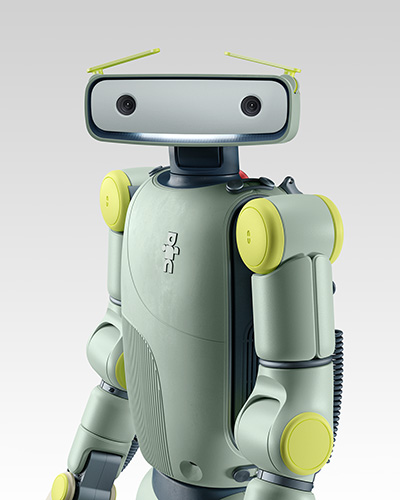
Standing at 107 cm (42 in.) and weighing 22.7 kg (50 lb.), Sprout is designed to be inherently safe. | Credit: Fauna Robotics
Fauna Robotics said it engineered Sprout’s physical form factor for approachability. The robot is designed to be small so that it is unintimidating, particularly for children.
Sprout also has a dedicated safety subsystem that monitors real-time conditions to enforce constraints across all mechanical and software levels, explained the company.
It designed the robot initially as a physical/embodied AI development platform for research laboratories.
Sprout serves as a high-performance, scalable platform powered by the NVIDIA Jetson AGX Orin for advanced perception and decision-making.
The robot offers developers a streamlined experience through stable APIs and containerized services that support everything from low-level motor control to high-level autonomy, Fauna explained. By using consumer electronics manufacturing processes and a low part count, the company said its design ensures that Sprout can scale efficiently from research labs to mass-market production.

The post Road to rail: Slashing costs and carbon with automation appeared first on The Robot Report.