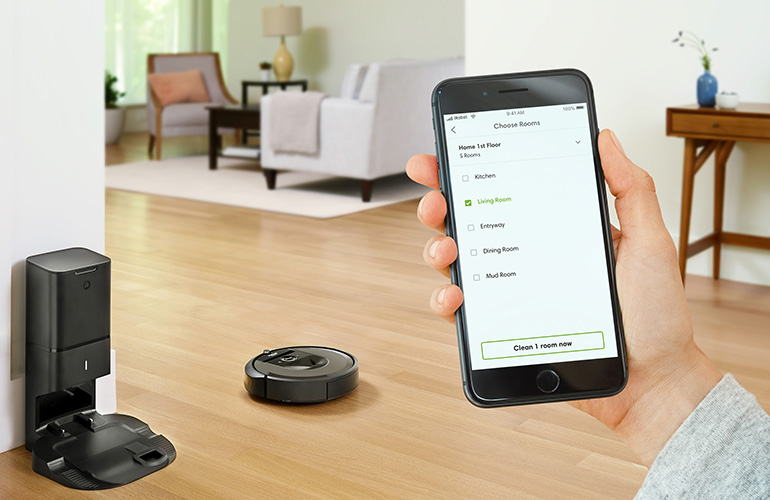
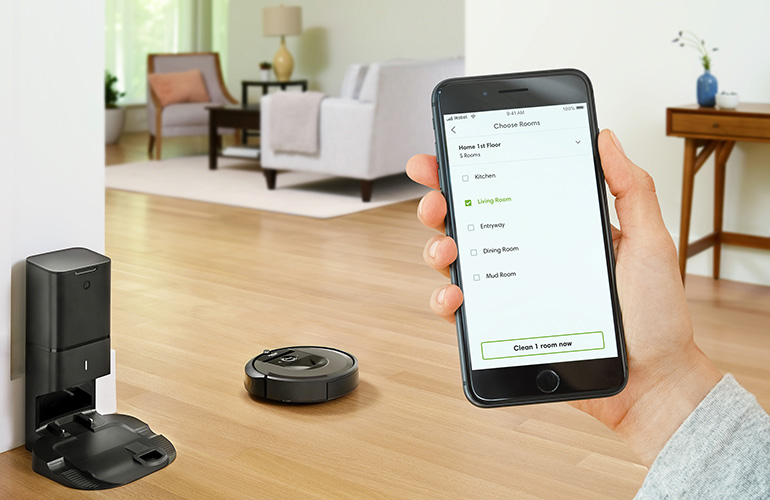
iRobot and Picea have set up a U.S. subsidiary to safeguard customer data. Source: iRobot
iRobot Corp. is back from bankruptcy with the completion of Shenzhen Picea Robotics Co.’s acquisition of the consumer robotics pioneer. iRobot said it has emerged from a pre-packaged Chapter 11 process “with an improved financial foundation and additional capacity to invest in the next generation of smart home robotics.”
Last month, iRobot announced that it had entered into a restructuring support agreement with its creditor Santrum Hong Kong Co. and contract manufacturer Picea. The company had faced falling revenue, diversification challenges, and antitrust concerns that doomed its proposed acquisition by Amazon. However, it remained committed to continuing to produce and support its fleet of millions of robotic vacuum cleaners.
“It has been a privilege to lead iRobot through this pivotal period, and I’m incredibly proud of the team’s resilience, focus, and commitment to our customers,” stated Gary Cohen, CEO of iRobot. “Building on iRobot’s strong foundation, I look forward to working with the Picea leadership team as we enter our next chapter with renewed momentum.”
“My conviction in iRobot has never been stronger, and together with Picea, we are focused on delivering reliable, high-quality products, supporting our customers, protecting consumer data, and operating with discipline as we move forward,” he added.

iRobot restructures, forms unit to protect U.S. data
Three engineers in MIT’s Artificial Intelligence Lab founded iRobot in 1990. Since introducing its first Roomba robot vacuum in 2002, the company said it has sold more than 50 million devices to date. iRobot has also added features for cleaning, mapping, and navigation to its portfolio, which it plans to continue developing.
In 2022, iRobot’s plan to map homes with its vacuums sparked criticism from privacy advocates. However co-founder and then-CEO Colin Angle said at the time that “iRobot does not – and will not – sell customers’ personal information. Our customers control the personal information they provide us, and we use that information to improve robot performance and the customer’s ability to directly control a mission.”
As part of its restructuring plan, iRobot said it has implemented “structural, legal, and governance safeguards to protect U.S. and other global consumer data and connected devices.” They include the creation of iRobot Safe Corp., a U.S.-based subsidiary responsible for the protection of U.S. consumer data.
iRobot Safe and controls are intended to maintain a clear separation between iRobot’s Chinese ownership and its U.S. and other global consumer data. iRobot Safe will be governed by an independent board composed of U.S. citizens and will include an independent U.S.-based data security officer and an iRobot Safe CEO, each subject to strict eligibility requirements.
The company said these safeguards should give regulators, consumers, and partners confidence that its data governance framework to protect consumer data remains transparent, enforceable, and effective following the transaction. Some of iRobot’s founders and other industry experts had expressed concerns about potential Chinese ownership of a leading provider of robots to U.S. households.
Picea provides business, consumer continuity
Picea, which has research and development and manufacturing facilities in China and Vietnam, said it holds more than 1,300 intellectual property rights worldwide. The company noted that it has manufactured, sold, and serviced over 20 million robotic vacuum cleaners. Picea also said it has more than 7,000 employees and relationships with leading global enterprises.
As a longtime contract manufacturer and contract lender for iRobot, Picea provided liquidity and operational support during the restructuring process. It said it helped ensure continuity for customers, employees, suppliers, and global partners.
Following the transaction, iRobot is now a privately held company wholly owned by Picea. iRobot will continue to be a based in Bedford, Mass., with engineering, product development, marketing, and other corporate functions across the U.S.
iRobot said it will advance its long-term innovation strategy, “focused on delivering trusted robotics and smart home devices, enhancing customer experiences, and investing in future product development.” The company did not specify whether it will move beyond floor-cleaning robots or if it would rehire any of the staffers laid off in recent years.
The post iRobot emerges from Chapter 11 as restructured Picea U.S. subsidiary appeared first on The Robot Report.