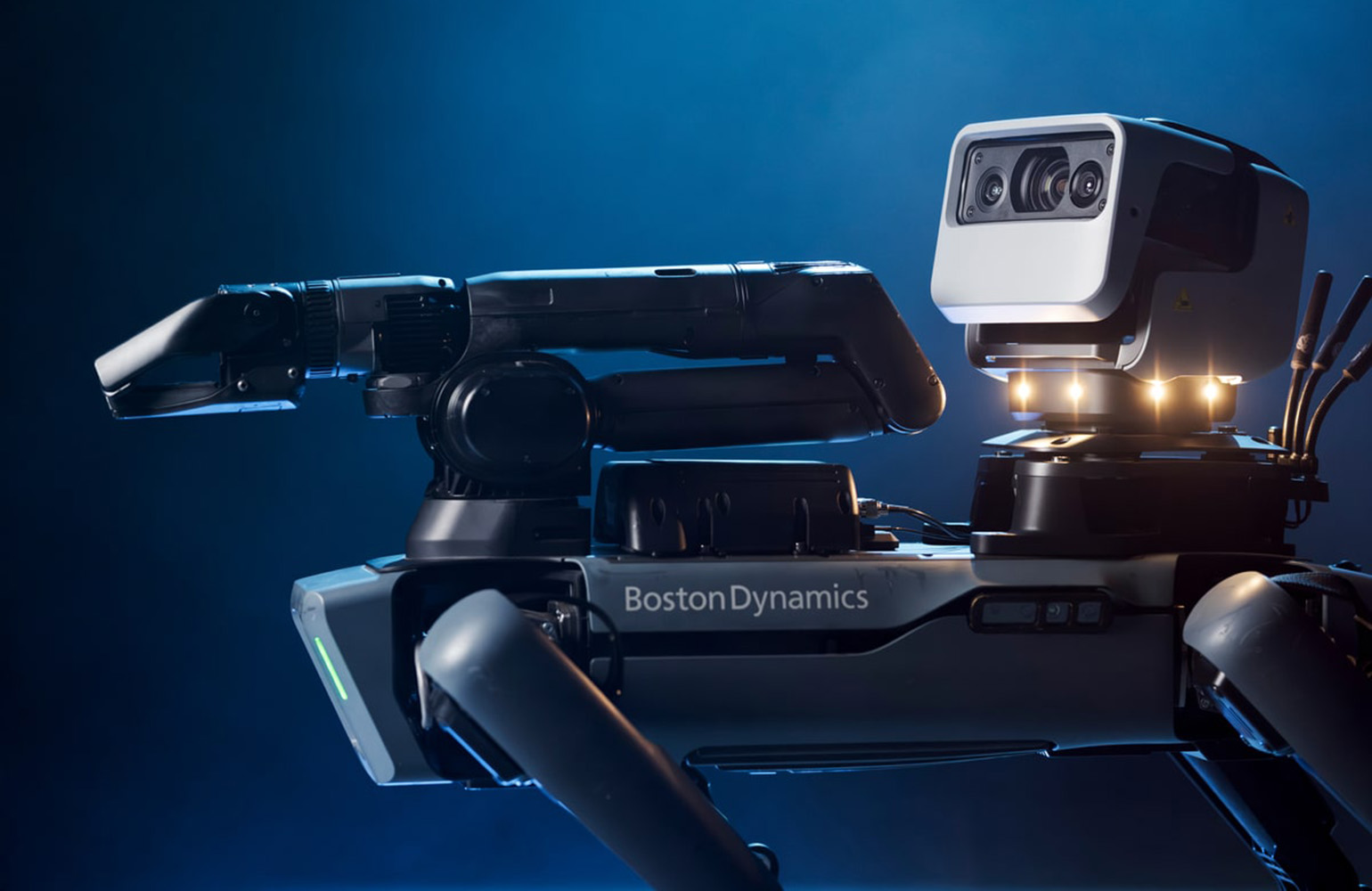
Boston Dynamics’ Spot quadruped with the new Spot Cam 2. | Source: Boston Dynamics
Boston Dynamics Inc. yesterday released the 5.1 update to its Spot quadruped and Orbit, the company’s fleet management and data analysis software. Boston Dynamics said the latest update will help its customers accelerate deployments with new workflows, enterprise-level controls, and a refreshed data collection payload.
The new update includes improvements to the AI models that power Spot and Orbit. Boston Dynamics said it has designed its products to continuously learn about customer facilities in order to improve over time.
The company said its Orbit AIVI (artificial intelligence visual inspection) cloud-based models will improve based on the most common and valuable inspections that Spot conducts. It will enables multiple, larger models that can update regularly without updating Orbit software, said Boston Dynamics. This means that new inspections can be added without disrupting existing workflows.
Boston Dynamics said these enhancements will improve its existing models and add capabilities such as sigh glass and pallet detection. In addition, it is expanding AIVI to use images captured with Spot’s body and gripper cameras. This allows Spot customers with Spot Arm to use that additional reach to inspect dark or difficult-to-access areas.

Boston Dynamics unveils Spot Cam 2 and acoustic imaging
The new Spot Cam 2 payload adds features to Spot Cam+IR with new features that add perception capabilities to the legged robot’s optional acoustic imager. Boston Dynamics said its second-generation Spot Cam now has a 4K pan-tilt-zoom (PTZ) camera with 25x optical zoom, an integrated radiometric thermal camera, and a 360 x 130º spherical camera.
The on-board accessory bay is compatible with Sorama L642 or Fluke SV600 acoustic imager—bringing more flexibility for sensor pointing for acoustic inspections, said the company. The accessory bay will allow for future payload attachments and integrations.
The new Spot Cam can be mounted either front or rear, and it is equipped with eight ultra-bright LED lights for illumination in dark environments. Boston Dynamics added that customers have been using acoustic imaging on Spot to monitor the performance of various critical equipment. Using the same payload, customers can look for change-detection alerts on audio captures.
Spot equipped with the Fluke SV600 or Sorama L642 will capture beamformed acoustic data from mechanical equipment. That data can be used to develop a change-detection algorithm to flag anomalies from nominal state captures. Customers will be able to visualize these results over-time via a spectrogram, said the Waltham, Mass.-based company.
With the new acoustic change detection feature, Boston Dynamics said it is giving users the ability to monitor those changes over time.
Spot can now open doors, even without its arm
Boston Dynamics has expanded its robot behavior library from staircase and crosswalk actions to help take Spot missions even further. With Door Opening, Spot has even more access to a facility without the use of an arm, the company said.
Depending on a site’s automatic door configuration, Spot can now use both motion-activated doors as well as access controlled ones. After on-site integration, users may enable Spot to pass through access-controlled doors by adding actions to missions.
This feature has been deployed with 18 beta customers and has already opened 2,500 doors, Boston Dynamics said.
Updated robot can now take on security patrols
In addition to monitoring critical equipment and facility compliance, Update 5.1 introduces security patrol as a new mission type. Boston Dynamics asserted that these missions offer visibility to customers during off hours or more security coverage in sensitive areas of their operations.
If Spot detects a person during these patrol missions, the robot will pause, activate AV lights, capture PTZ, panoramic, and thermal images, trigger an alert, and resume its mission path. The new mission behaviors allow Spot to autonomously pause, redirect, or end missions based on what it sees.
Users can put up fiducials on mission paths that allow Spot to return to the dock or sit down and stay there indefinitely.
Boston Dynamics also announced more features for Site View authoring—allowing users to create even more inspections directly from within Orbit. Users of Spot Cam and Spot Cam+IR will be able to author new inspection actions for PTZ, thermal, and gauge readings directly from the Site View window in Orbit.
Staffers no longer need to walk around their facilities with Spot to record new inspection points. With the new Spot Cam 2, they can also author acoustic (leak and vibration) inspections from within Site View, said Boston Dynamics.
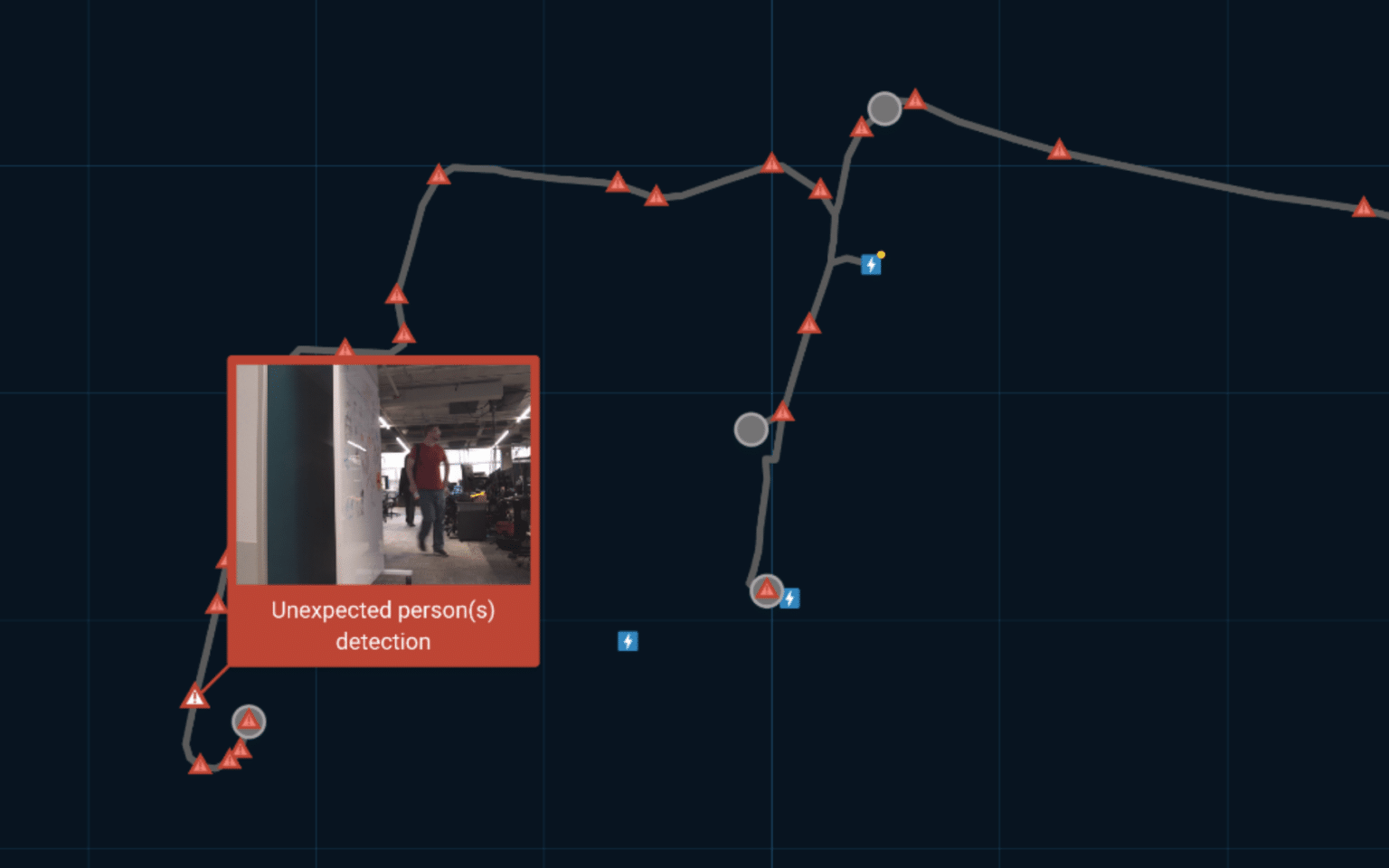
Spot’s AI detected an unexpected person on a security patrol. | Source: Boston Dynamics
Boston Dynamics unlocks multi-modal inspection
Customers using Spot equipped with Spot Cam 2, an acoustic payload, and a mechanical inspection license can now record a multi-modal mechanical inspection, explained Boston Dynamics. Inspections can specify an acoustic mechanical inspection, a thermal inspection, and a short video recording, all targeting the same location. This provides users with a single unified output of data in Orbit.
In addition, the company introduced the ability to capture thermal panoramas. Spot Cam 2 can capture a series of thermal images and stitch them into a single inspection. The panoramas will appear as an overlay in Site View, providing an additional spectrum of information from Spot, it said.
Boston Dynamics said that Update 5.1 gives customers access to seven built-in demo dances, no additional license needed. Every customer can access these sequences from a tablet with their upgrade. The company did note that operators should follow standard operating guidelines for Spot, running dances and “emotes” at a safe distance from people.
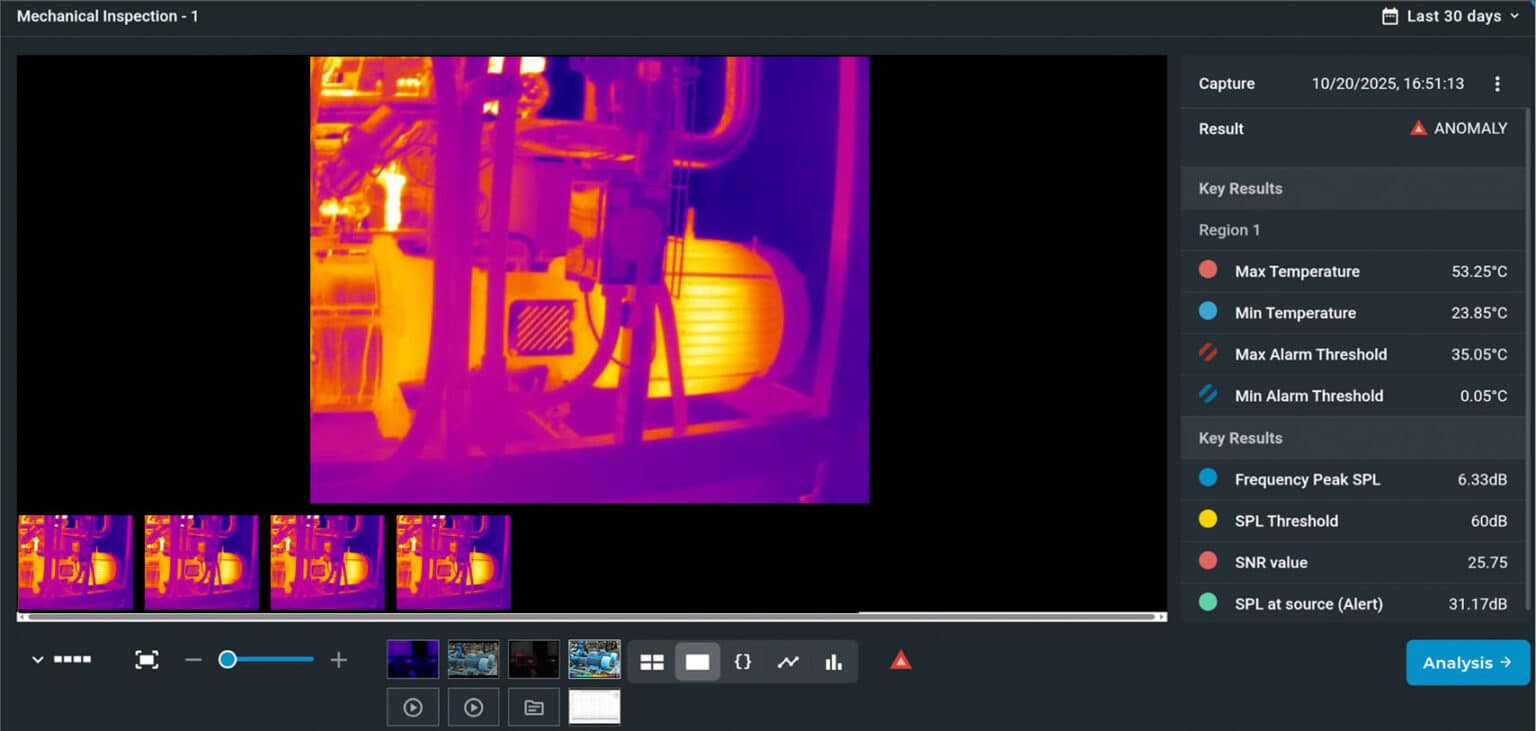
Spot performs a multimodal inspection. | Source: Boston Dynamics
Product version of Atlas now available
In its blog, Boston Dynamics announced the product version of its Atlas humanoid, which it showed at CES 2026 earlier this month. After deploying more than 2,000 Spot and Stretch robots, the company said its partnership with parent Hyundai Motor Group will allow it to produce thousands of robots each year.
Hyundai is also Boston Dynamics’ first customer, and the companies said they expect to ship robots to its Robotics Metaplant Application Center (RMAC) this year. Google DeepMind is working with Boston Dynamics to accelerate AI training for its humanoids.
“At 1.9 m (6.2 ft.) tall with a 2.3 m (7.5 ft.) reach, Atlas can work in the same environment your team does,” said Boston Dynamics. “However, it can also work in environments that they shouldn’t. Atlas’ operational temperature range is -20° to 40°C (-4° to 104°F) and it can handle repeated 30 kg (66 lb.) lifts with ease, eliminating ergonomic strain and reducing the risk of workplace injuries for staff.”
The company said integration with Orbit, as well as with manufacturing execution systems (MES) or warehouse management systems (WMS), will enable the ruggedized Atlas to deliver returns on investment (ROI).
The post Boston Dynamics releases Spot and Orbit 5.1 with new Spot Cam appeared first on The Robot Report.